X
Menu
Subscrever newsletter:

Mentors | Ethno Portugal

Associação PédeXumbo (Atualizado em: 26 Fevereiro, 2026 )

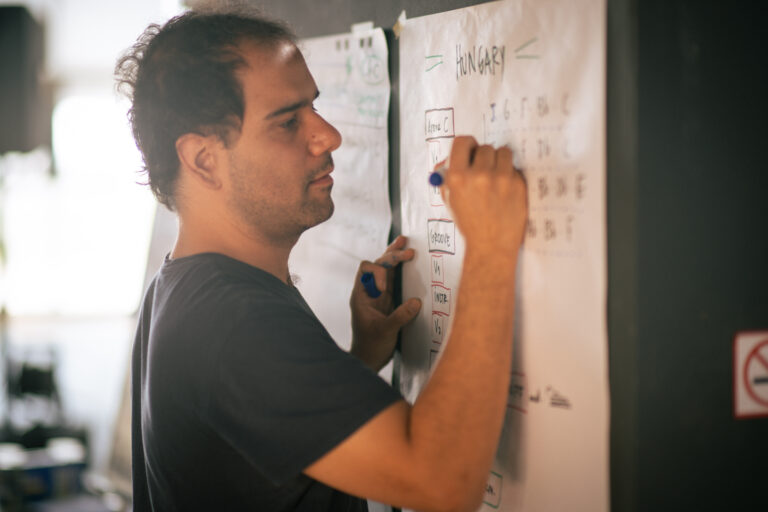
The work of Ethno artistic mentors is to prepare the participants at the Ethno camp for the upcoming concerts, livestreams and recordings. In order to do this, they structure and help participants prepare the workshops that they must give in order to share their music with the whole group. This could mean working in advance of an upcoming workshop to support and assist the participants who are teaching their tune/song. During the workshops, artistic mentors provide assistance as needed (for example – playing the rhythm at a low volume on loop, playing the chords, or writing charts to make lyric and chord learning easier). At the beginning and end of the day, they also organise and facilitate group rehearsals, wherein all the musicians at the Ethno come together to rehearse and play what they have learnt.

Artistic mentors are Ethno musicians who have been to a number of camps and have taken on themselves the responsibility of organising and preparing the musical outputs, and assisting the Ethno organisers. This can include looking after participants during workshops and at camp, technical work such as soundchecks and recordings, and emceeing the concert(s).

Ethno Portugal Artistic Mentors
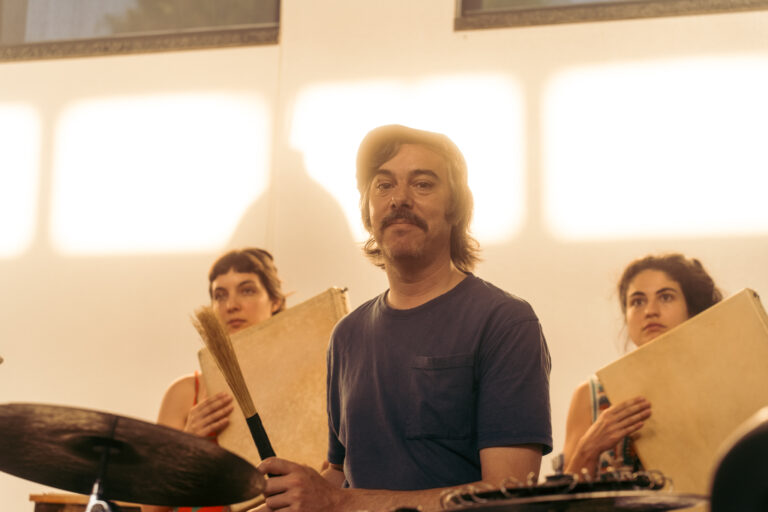
Juan de la Fuente
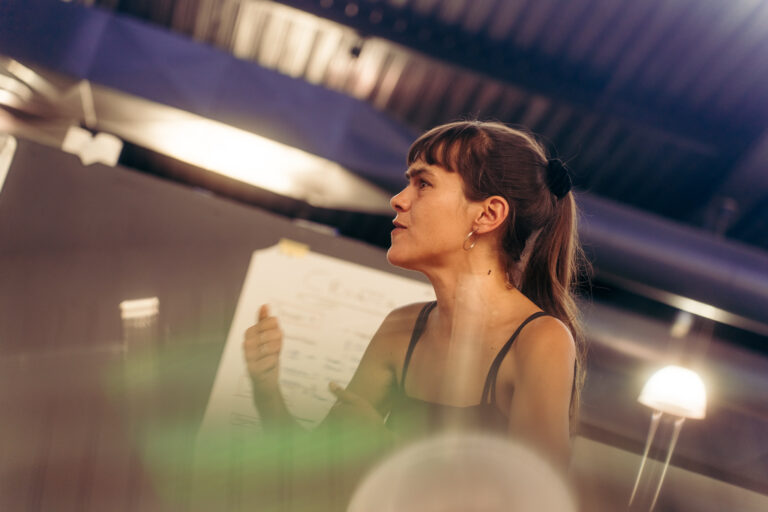
(Madrid, 1982)
Juan de la Fuente Alcón trained as a percussionist at the Escuela de Música Creativa in Madrid. Since then, he has specialized in traditional music, driven by a curiosity to explore the rhythmic repertoire of the Iberian Peninsula and Latin America, as well as the influences of African and Eastern rhythms. He also has a strong interest in group work, drawn to the collective potential it suggests and enables. He studied historical percussion with master Pedro Estevan, percussionist for Jordi Savall. Juan has led various percussion ensembles integrated into artistic, creative, and educational projects that use the diversity of knowledge, cultures, and backgrounds as a stimulus for musical creation and sharing. These include Ethno Catalonia, Ethno Spain, and Ethno Portugal (by Associação PedeXumbo), as well as Acorde Maior (Village Underground). He produced and performed with Martina Quiere Bailar (Madrid), a band featuring original compositions for folk dancing, strongly influenced by traditional music from Central Europe and the Iberian Peninsula. Currently, he works with Sete Lágrimas (early music), Fado Violado (a journey between Fado and Flamenco). In 2017, he founded the Ethnic Percussion Ensemble in Porto.

Teresa Campos

(Porto, 1988)
Teresa Campos is a singer, composer, and creative music project leader. Holding a degree in Education, she graduated with distinction from the Master’s in Music program at the Guildhall School of Music & Drama (London). She teaches Portuguese traditional music in the Máster en Interpretación de Folklore de la Península Ibérica (Madrid) and is particularly interested in traditional music’s potential as a social and creative tool. As a multidisciplinary artist, she co-created two performances for schools, families, and audiences of all ages: Trois voix, quatre saisons, a project by Jeunesse Musicale de France, and Castōr e Pollūx – considerate lilia, commissioned by Teatro Municipal do Porto. As a composer, she collaborates with Nenad Kovačić in creating soundtracks for Croatian theatre plays and documentaries, such as Nora oder Wie man das Herrenhaus kompostiert (2024), Dobra Ekonomija (2022), and Love Around the World (2021). Teresa is part of Collado, a band focused on Iberian traditional music, and co-founder of çhâñt élečtrónïqùe, an international collective of seven musicians exploring the intersection of traditional music and electronics. She is also a founding member of Sopa de Pedra, a vocal group of ten women dedicated to the collection, rearrangement, and a cappella singing of Portuguese music rooted in tradition. She’s lucky to do what she loves.

Tiago Candal

(Porto, 1993)
Tiago Candal is a musician, composer, and sound technician. He holds a bachelor’s degree in Music Production and Technologies and a master’s degree in Composition from the School of Music and Performing Arts (ESMAE), as well as training in classical singing from the Porto Music Conservatory. He has also received various trainings in folklore and traditional music from musicians and educators from around the world. With a multifaceted aesthetic, he works in the fields of performance, theatre, and dance—as a music and sound design creator, as a live performer, and as a sound designer and technician. He also conducts research in music pedagogy, working with people of all ages, in both formal classical settings and informal collaborative learning environments.
 

Olmo Marín

Born in Vitoria, Basque Country, Olmo Marín began his musical journey amidst punk sweat and afrofunk hips but developed as a musician in the Netherlands, where he graduated in Brazilian Guitar from Codarts – Rotterdam Conservatory. He expanded his groove across various bands and styles, notably mastering the seven-string guitar with Choros Limoneros, with whom he recorded a self-titled album in 2013. He easily flows through the folk universe with bands like Mulstef and Luminaria, dives into the roots of choro and samba with Choro de Maas, Dr. Brincadeira, and Leite Quente, and explores dance music in projects such as Buyakano, Ktinga, and La Fundación. Salsa, hip-hop, afrobeat—life is a carnival!
 In 2015, he moved to Lisbon, joining projects such as Orquestra Latinidade, Nancy Vieira, Salvador Sobral, Sambacalao, Diogo Picão, Rosa Mimosa y sus Mariposas, Gondwana, and SanlaMuerteCumbiaClub, and has performed in international festivals like Boom, North Sea Jazz, Misty Fest, Fusion Festival, Med, and Sines FMM. Beyond live music, he has also contributed to the organization of the Full Moon Babylon festival and co-founded the Erasmúsica school in Rotterdam. Since 2016, he has been leading the “Tropical Freedom” workshop at the Sommermusikfest in Germany.

Scroll to top